

By Albatros Yachting | Fethiye, Gocek, Bodrum and Marmaris
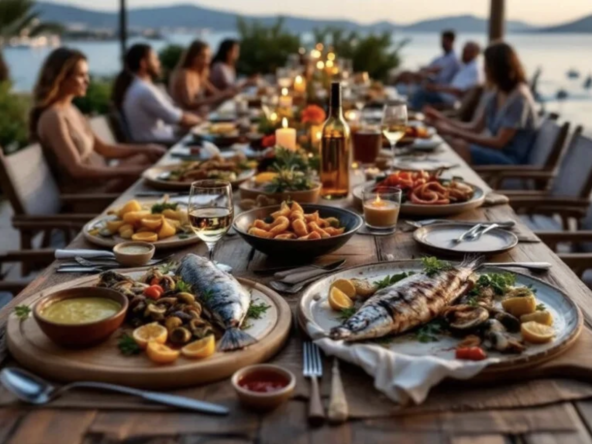
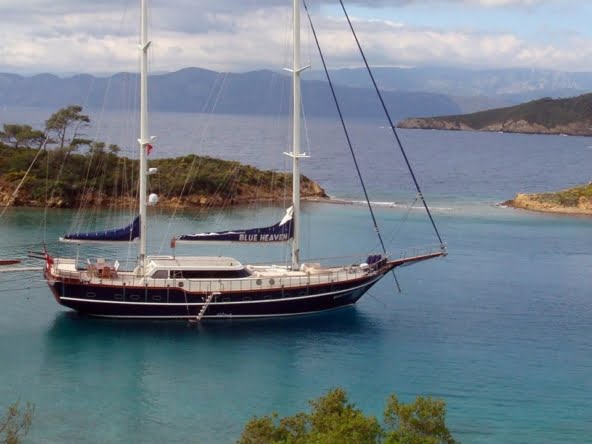
There is a particular moment on a Turkey-Greece combination charter that guests describe again and again. You have spent three days anchoring in Lycian coves — water so clear you can read the depth by the colour alone, pine trees coming to the edge of the cliffs, no other boats in sight. Then one morning the captain turns west, the engine opens up slightly, and by afternoon you are tying up in a Greek island harbour with a cold glass of wine and a taverna menu in a language you cannot read.
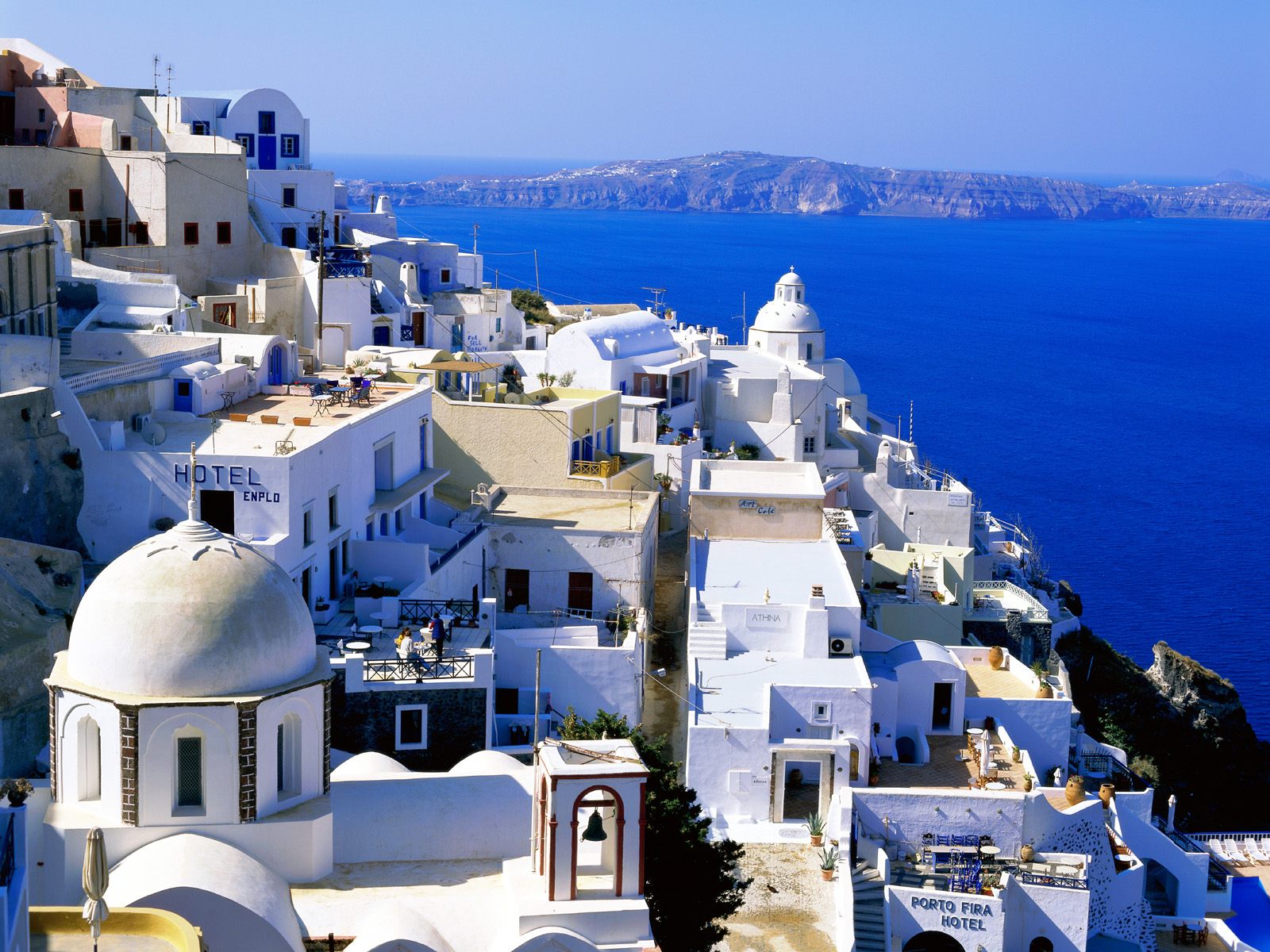 Two countries in one week. Two coastlines that have faced each other across this narrow sea for three thousand years. No other sailing destination in the world offers this combination.
We have been running Turkey-Greece combination charters since the 1990s, departing from Fethiye, Gocek, Marmaris, and Bodrum. This is everything you need to know.
Can You Sail from Turkey to the Greek Islands?
Yes — and it is more straightforward than most guests expect. Turkish and Greek waters are separated by narrow channels at several points along the coast. Kos is 11 nautical miles from Bodrum. Symi is 20 nautical miles from Marmaris. Rhodes is reachable from Fethiye in a comfortable day’s sail of around 50 nautical miles.
What it requires: advance notice, a transit log (the document that permits a yacht to move between Turkish and Greek waters), and clearance at a designated entry port on the Greek side. We handle all of this. Guests tell us they want to cross, and we arrange the paperwork, the port coordination, and the routing. On the day, the captain handles customs. You handle breakfast.
Which Islands Can You Reach — and From Where
The Turkish coast has two natural departure zones for the Greek islands. The southern cluster — Fethiye, Gocek, Marmaris — accesses the Dodecanese: Rhodes, Symi, Kos, Nisyros, Tilos, Halki, Kastellorizo. The northern zone — Bodrum — sits closest to Kos and the northern Dodecanese, and serves as the natural jumping-off point for guests wanting to reach the Cyclades on longer charters.
The Nearby Islands: Dodecanese
The Dodecanese are the 12 major Greek islands clustered along the Turkish coast. They are the most accessible from Turkey, the most varied in character, and — with the exception of Rhodes in high season — among the least crowded in the Aegean.
Kos
The closest Greek island to the Turkish coast. Just 11 nautical miles from Bodrum across the channel that separates them, Kos is often a guest’s first Greek island — and a very good introduction. Kos town has a working harbour, a medieval castle built by the Knights of Saint John, and a lively waterfront with good seafood restaurants. The island’s interior is green and fertile, unusual for the Aegean.
Kos is also the birthplace of Hippocrates, the father of medicine. The ancient plane tree under which he reportedly taught his students still stands in the main square, supported now by a metal frame and estimated to be over 2,400 years old. For guests departing from Bodrum, Kos is an easy half-day sail and suits charters that want a Greek island included without a significant detour.
Symi
The most visually dramatic island in the Dodecanese, and for many guests the highlight of the entire charter. Symi town rises steeply from the harbour in tiers of neoclassical mansions painted in amber, ochre, rose, and terracotta — colours that intensify in the afternoon light and reflect off the water below. The effect is theatrical in a way that photographs cannot fully capture.
The island is small. The upper town, Chorio, is car-free and largely unchanged since the 19th century, when Symi was one of the wealthiest islands in the Aegean — its sponge merchants built the mansions, and many have now been carefully restored as private homes. The harbour below, Gialos, has a handful of good restaurants and a bakery that opens early enough to catch the morning light.
Twenty nautical miles from Marmaris and 40 from Fethiye, Symi suits most one-week charters from either departure port. Most of our charters spend one night in Symi harbour and one in the bay of Panormitis on the island’s south coast, where an 18th-century Byzantine monastery sits directly at the water’s edge. The monastery’s bell tower is visible from the sea long before the anchorage.
Rhodes
The largest of the Dodecanese and the most historically layered. Rhodes town is a UNESCO World Heritage site and one of the best-preserved medieval cities in Europe — the old town is still enclosed within its original walls, built by the Knights of Saint John in the 14th century. The Street of the Knights, the Palace of the Grand Master, and the harbour where the Colossus of Rhodes once stood are all within walking distance of where you tie up.
Outside the old town, the island has a modern harbour area with provisioning facilities, good restaurants, and the full range of services a charter vessel might need. Rhodes is approximately 50 nautical miles from Fethiye and 20 nautical miles from Marmaris. Most charters spend one or two nights here. High season brings crowds to the old town, but by 9pm the day-trippers have gone and the streets belong to people staying on the island — or arriving by boat.
Halki (Chalki)
A short sail west of Rhodes lies one of the least-known islands in the Dodecanese, and one of the most perfectly preserved. Halki has a population of fewer than 300 people, no cars in the village, no chain anything. The harbour front is lined with neoclassical mansions built by 19th-century sponge merchants — the same prosperity that built Symi — most of them restored in the same amber and ochre palette.
There is one main settlement, one beach accessible by a short walk, and a Byzantine castle on the hill above the village. The tavernas serve what the fishermen caught that morning. It is an island for guests who want the Greek island experience as it existed before mass tourism arrived. Approximately 45 nautical miles from Fethiye.
Nisyros
An island built on a volcano, and the volcano is still active. Nisyros sits between Kos and Tilos, approximately 55 nautical miles from Marmaris, and its defining feature is the caldera at the island’s centre — a broad depression of grey and yellow earth venting sulphur steam, surrounded by coloured mineral deposits. You can walk down into it.
The main village, Mandraki, is built in traditional Dodecanese style on the cliff above the harbour: white cubic houses, cobbled alleys, a castle of volcanic black stone. The island produces good wine. Most guests who stop at Nisyros have never heard of it before their captain suggests it. Almost all of them consider it the highlight of the trip.
Tilos
Quiet, clean, and principled. Tilos declared itself carbon-neutral in 2019 — the first island in the Mediterranean to do so — and operates on wind and solar power. It has a small population, several good anchorages, a Byzantine castle accessible by a 45-minute walk, and tavernas that serve honest food at honest prices.
Tilos suits guests who want to anchor in a bay with no other boats, swim in undisturbed water, and eat dinner before 10pm. Approximately 60 nautical miles from Fethiye.
Kastellorizo (Megisti)
The easternmost Greek island, closer to Turkey than to any other part of Greece — visible from the Turkish town of Kas on a clear day. Kastellorizo has fewer than 500 permanent residents and is known internationally as the setting for the Italian film Mediterraneo, which won the Academy Award for Best Foreign Language Film in 1992.
The harbour is surrounded by Ottoman-era mansions in faded pastel colours, the sea inside the harbour is extraordinarily clear, and the atmosphere is one of gentle remoteness that larger islands cannot replicate. There is a sea cave, the Blue Grotto, accessible only by small boat, where the light enters from underwater and illuminates the cave in shades of blue that have no equivalent name in English.
Approximately 70 nautical miles from Fethiye. A natural stop on longer charters heading east toward Antalya or west toward Rhodes.
Southern Greek Islands
Karpathos
South of Rhodes and one of the least-changed islands in the Aegean. The northern village of Olympos, accessible only by boat or a long mountain road, is one of the few places in Greece where traditional dress is still worn as everyday clothing by the older generation — not for tourists, simply because that is what people wear. Strong meltemi winds make Karpathos a favourite among sailors. The scenery is dramatic throughout: bare mountains falling directly to the sea, small beaches accessible only from the water.
Approximately 90 nautical miles from Rhodes. Best suited to two-week charters or as a stop on a longer southern route.
Crete
The largest Greek island and the most diverse. Minoan ruins at Knossos, the Samaria Gorge, the old Venetian harbour at Chania, mountain villages where the food is unlike anything you will find on the coast. Crete is also large enough that the most beautiful parts of the coastline remain uncrowded even in August — you simply have to know where to go.
Crete is approximately 150 nautical miles from Rhodes. It is best suited to charters of ten days or more, or to motor yacht charters that cover longer daily distances. Guests who make the passage to Crete rarely consider it their last.
The Cyclades: Santorini, Mykonos and Beyond
The Cyclades are the islands most people picture when they think of Greece — whitewashed cubic houses, blue-domed churches, volcanic rock falling to turquoise water. They are further from the Turkish coast than the Dodecanese, and reaching them comfortably requires either a two-week charter or a faster motor yacht. For guests with the time, the passage is worth every nautical mile.
Santorini
One of the most extraordinary places in the world to arrive by boat, and one of the most ordinary to arrive by cruise ship. The difference matters.
Santorini is the remnant of a volcanic caldera — a massive eruption around 1600 BC collapsed the centre of what was then a circular island, and the sea flooded in. What remains is a crescent of cliffs rising 300 metres from the water, with the villages of Fira and Oia perched at the top. Arriving by boat means sailing into the caldera itself — passing between the remains of the crater walls, anchoring in water 400 metres deep with the cliff face rising directly above you. No road leads here. The cruise ships anchor where you are anchored and ferry passengers to shore by tender. You are already there.
Santorini is approximately 160 to 200 nautical miles from the Turkish coast depending on departure point. On a one-week gulet charter, reaching it requires departing from Bodrum or Marmaris and sailing with purpose, leaving limited time for stops along the way. On a two-week charter, you can approach through the Dodecanese — stopping at Kos, Nisyros, and Tilos — and arrive at Santorini having already spent a week on the water. That is the version most guests find unforgettable.
For guests whose primary goal is Santorini in a single week, a motor yacht charter gives the speed to cover the distance and still allow anchorage time in the caldera. Sunset over Oia, seen from the water, is something guests describe for years afterward.
Mykonos
Approximately 180 nautical miles from Bodrum and 220 from Fethiye. The most energetic island in the Aegean — famous for its whitewashed labyrinthine village, the windmills on the ridge above the port, and a nightlife that runs until the following afternoon. Mykonos in July is not a quiet experience. Mykonos in September is considerably more manageable.
What Mykonos also offers, one nautical mile offshore, is Delos — a small uninhabited island that was one of the most sacred sites in ancient Greece, the mythological birthplace of Apollo and Artemis. No one lives on Delos, but the archaeological site is open during the day: temples, a theatre, a mosaic of dolphins, and the famous Terrace of the Lions. Arriving at Delos by tender from your anchored charter boat, before the day-trippers arrive from Mykonos by ferry, is one of the quieter pleasures available in the Aegean.
Paros and Naxos
Between Santorini and Mykonos in geography, and between them in character. Paros has a beautiful harbour village, excellent fish restaurants, and beaches that are lively but not overwhelming. Naxos is the largest of the Cyclades, with a fertile interior, Venetian towers in the mountain villages, and a harbour dominated by the Portara — a marble gate from a 6th-century BC temple that was never completed, standing alone on a small peninsula at the harbour entrance. Both islands suit guests who want Cycladic scenery without the extreme crowds of the most famous names.
What the Greek Islands Add to the Cost
Extending a charter into Greek waters adds 10 to 20 percent to the total weekly cost. The additional charges include Greek port dues and anchoring fees at each island, transit log and customs clearance fees, additional fuel for longer passages, and for some vessels a Greek cruising permit.
We handle all permits, paperwork, and port coordination. Guests tell us where they want to go. We arrange everything else and factor all Greek fees into the charter plan before departure so there are no surprises at the end of the week.
Best Time to Visit the Greek Islands by Yacht
June is the best month across almost every island. The Dodecanese are uncrowded, the Cyclades are accessible, and the meltemi — the strong northerly wind that picks up in July — has not yet arrived at full strength. Harbour tables are available. Anchorages have space. The light in June is exceptional.
July and August are peak season everywhere. Santorini and Mykonos become extremely crowded. The Dodecanese are busier but more manageable. The meltemi wind blows strongly from the north, which creates excellent sailing conditions but can make some anchorages uncomfortable.
September is the finest month for the Cyclades. Crowds thin after the school holidays, the meltemi eases, and the sea holds its summer warmth. For guests whose priority is Santorini or Mykonos without the July crowds, September is the clear choice.
May and October offer the quietest Greek islands and the lowest prices. Some smaller tavernas and facilities close in October, but the islands themselves are at their most peaceful.
Planning Your Greece Charter with Albatros Yachting
We plan every Turkey-Greece charter collaboratively with our guests before departure. Tell us which islands matter to you — whether that is the medieval streets of Rhodes, the caldera of Santorini, or the quiet harbour of Halki — and we build a route that makes it possible within your timeframe and vessel choice.
For guests new to the region, we will suggest a route based on your group’s priorities: history, scenery, beaches, food, nightlife, or some combination. For returning guests, we will pick up where you left off.
We have been doing this since 1995. The Greek islands have been part of our work from the beginning.
Albatros Yachting has been running Turkey-Greece combination charters since 1995, departing from Fethiye, Gocek, Bodrum, and Marmaris. All vessels are TYBA-registered and operate under Turkish Maritime Authority certification.