

By Albatros Yachting | Fethiye, Turkey
There is a particular sound a gulet makes that no brochure photo can capture: the low creak of timber settling against water, the soft slap of rope against varnished rail, the engine dropping to an idle as the anchor chain runs out. Guests who have only seen a gulet in photographs are usually surprised by how solid it feels underfoot — nothing like the lean, bouncing sensation of a fiberglass sailboat. That solidity is the whole point. It is what generations of builders along this coast were after.
We have been building and operating gulets from our own shipyard in Fethiye since 1995, and we still get the same question from first-time charterers: what exactly is a gulet, and how is it different from every other boat with sails?
Here is the full answer.
The Origin: A Working Boat, Not a Pleasure Craft
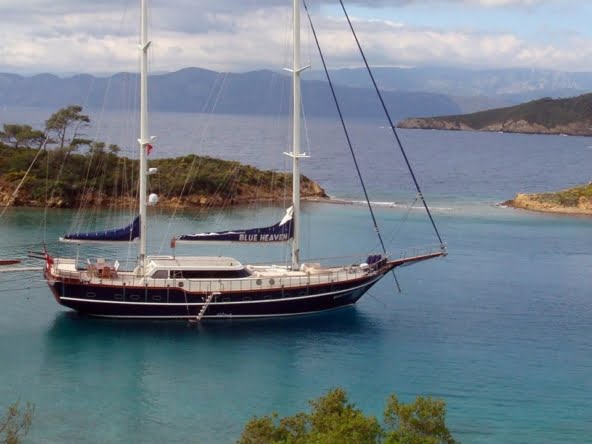
The gulet — pronounced “goo-let,” from the Turkish *gulet* — began life as a sponge-diving and cargo vessel along the Bodrum and Fethiye coastline in the early 20th century. Before tourism existed in any organized form, these broad, wooden boats hauled goods between Aegean ports and supported the region’s sponge-diving industry, which was, at the time, one of the few reliable trades available to coastal communities.
The design that made gulets practical for fishing and trade — a wide beam for stability, shallow draft for navigating close to shore, and a flat, spacious deck for handling cargo or diving equipment — turned out to be exactly what pleasure chartering needed decades later. When Turkish coastal tourism began developing in the 1970s, boat builders simply adapted the existing gulet hull form, added cabins below deck, and the modern charter gulet was born.
This history matters for one practical reason: a gulet is not a yacht that was redesigned to look traditional. It is a traditional working hull that happened to be perfectly suited for comfortable cruising. The stability you feel on board is inherited from a boat that once needed to stay upright while hauling nets in open water.
What Makes a Gulet a Gulet
A few features define the category, regardless of size or luxury level:
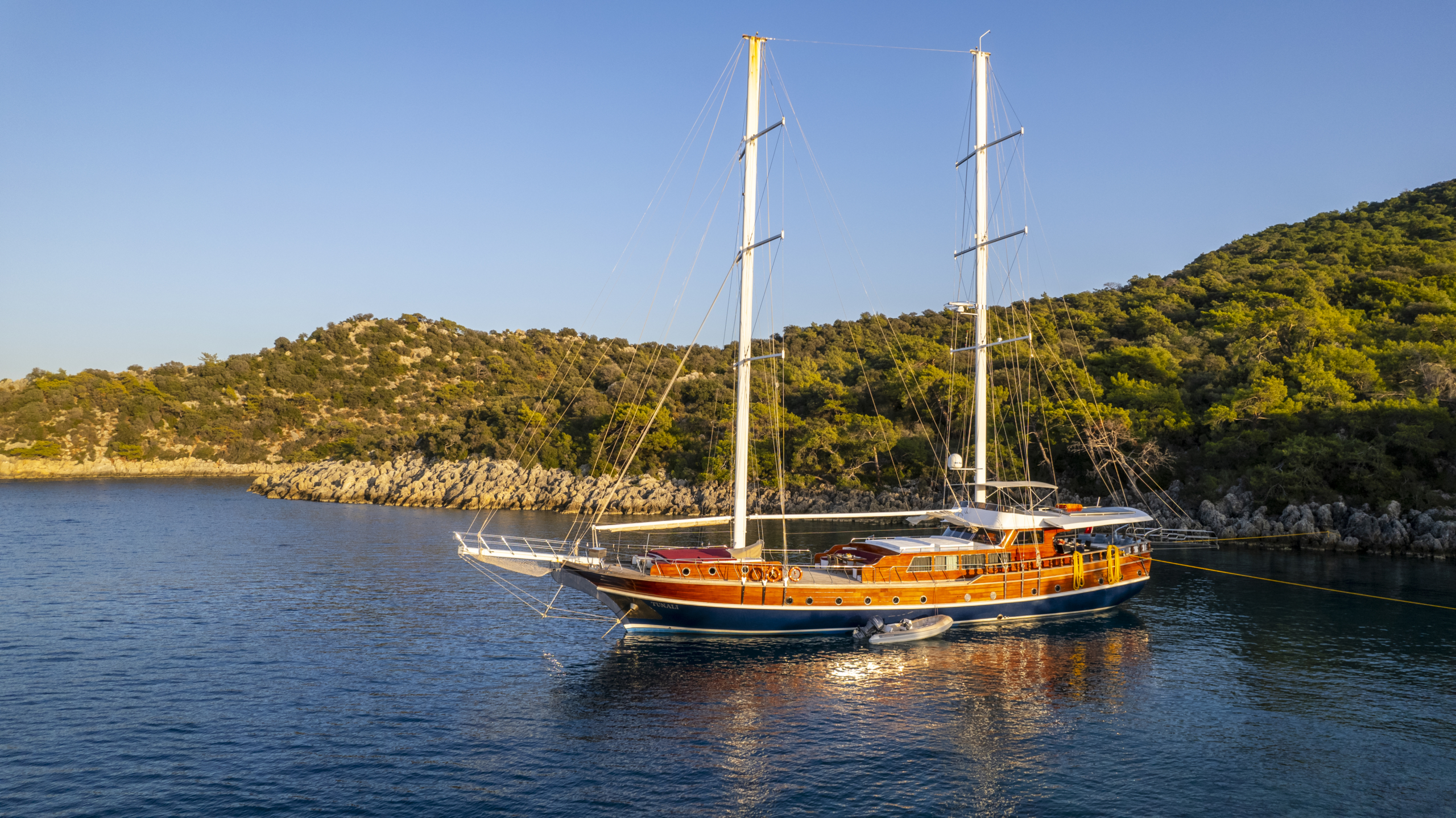
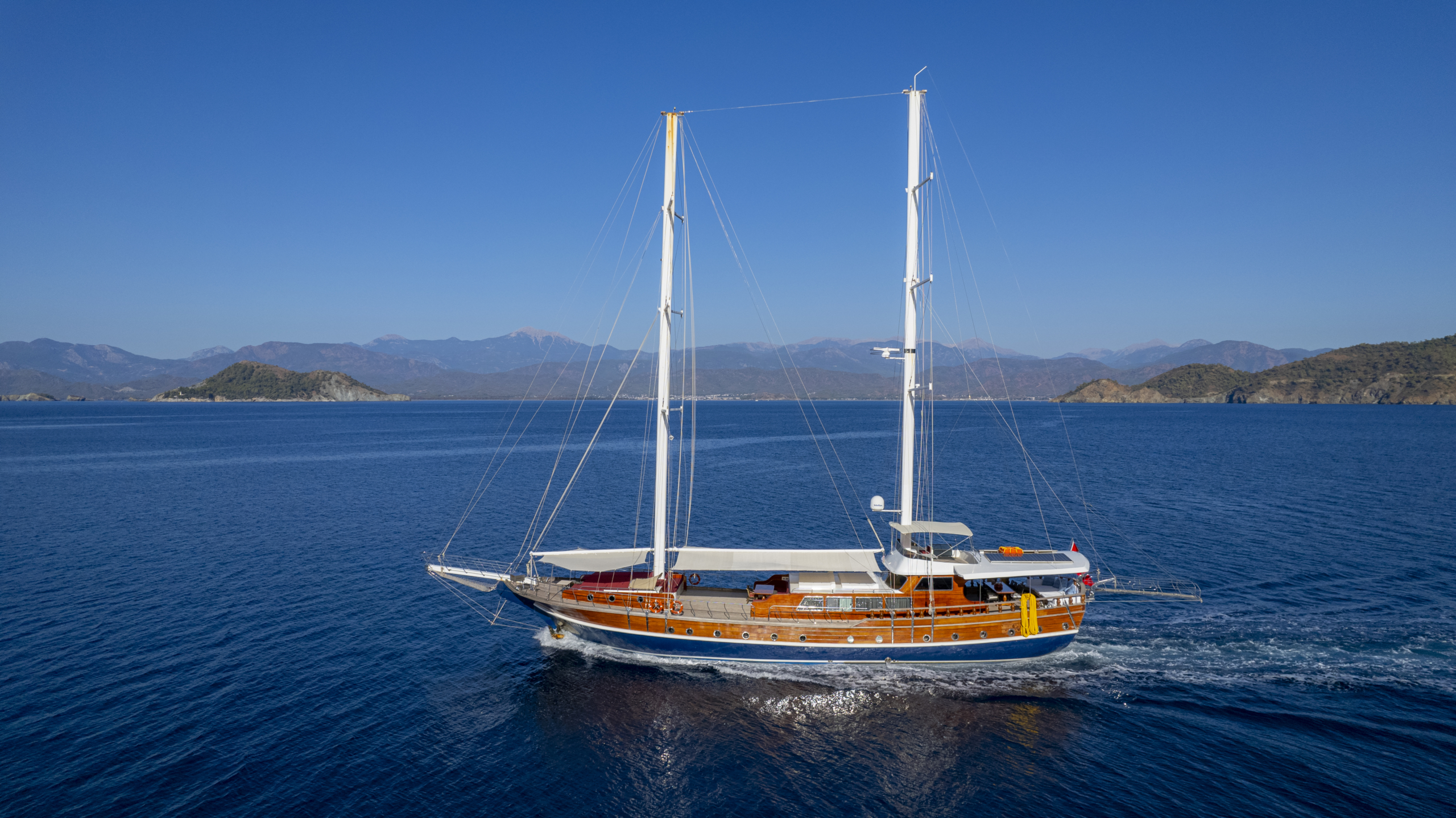
Wooden hull construction. Traditionally built from pine or, on higher-end vessels, more durable hardwoods, gulet hulls are still largely constructed by hand in shipyards along the Turkish coast — including our own in Fethiye. This is increasingly rare in global yacht building, where fiberglass and composite construction dominate.
Broad beam, shallow draft. A gulet’s width relative to its length gives it a stability that narrower sailing yachts cannot match. Combined with a shallow draft, this also allows gulets to anchor close to shore in bays that deeper-keeled vessels cannot enter.
Two masts, traditionally rigged. Most gulets carry two masts and can sail under wind power, though the majority of cruising happens under engine. The sails are as much a part of the vessel’s character as its propulsion — raised when conditions allow, lowered without ceremony when they don’t.
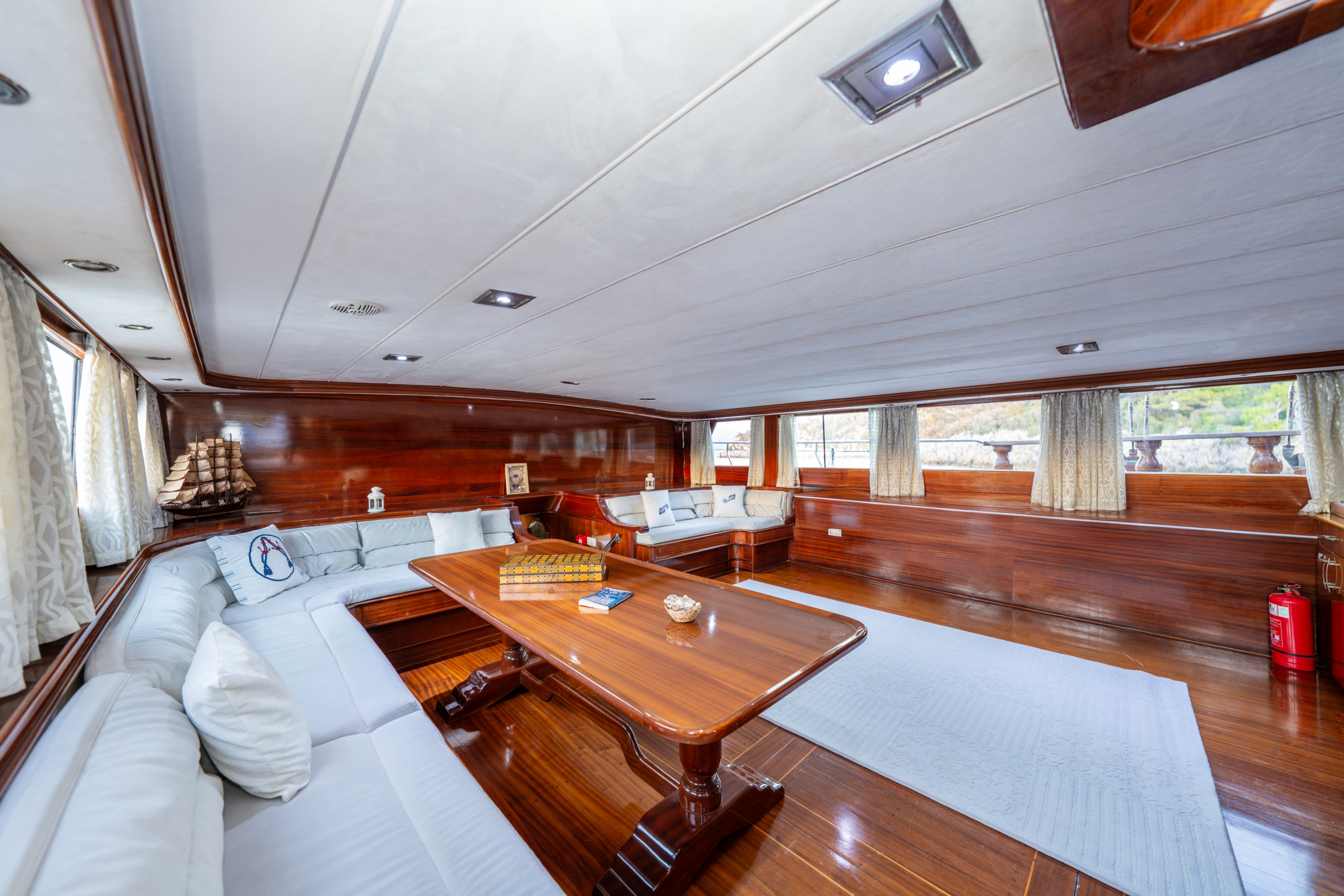
A flat, open aft deck. The rear deck of a gulet is typically open and shaded, built around communal dining and lounging rather than the cockpit-and-helm layout of a sailing yacht. This is where charter guests spend most of their daylight hours.
Below-deck cabins with en suite bathrooms. Unlike the original working vessels, modern charter gulets are fitted with proper cabins — usually 4 to 8 of them — each with its own bathroom, air conditioning, and a real bed.
Gulet vs. Other Vessel Types
This is where confusion usually starts, so here is the direct comparison.
**Gulet vs. sailing yacht:** A sailing yacht is built for sailing performance — narrower, faster under wind, and requiring active crew attention to rigging and trim. A gulet is built for comfort and stability, motors more than it sails, and asks nothing of its guests beyond showing up.
Gulet vs. motor yacht: A motor yacht is faster, covers more distance per day, and typically has a more contemporary interior design. A gulet moves slower — usually 8 to 10 knots — and trades speed for the wide, social deck space and traditional character that motor yachts don’t offer.
Gulet vs. catamaran: A catamaran’s twin hulls give it exceptional stability and shallow draft, similar advantages to a gulet but achieved through entirely different naval architecture. Catamarans tend to suit families and guests prone to seasickness particularly well; gulets suit groups who want the specific atmosphere of a wooden sailing vessel.
None of these is objectively “better.” They suit different priorities, and matching the vessel to the group is the first real decision in planning a charter.
Gulet Sizes and Cabin Configurations
Gulets in the Turkish charter fleet generally fall into a few size categories:
A standard gulet runs 18 to 24 meters with 4 to 6 cabins, accommodating 8 to 12 guests. This is the most common configuration for families and friend groups, and it is where most first-time charterers start.
A Large gulet extends to 26 to 34 meters with 6 to 8 cabins, suiting larger groups or those wanting more space per guest. Our own flagship, the Albatros M, falls into this category, with the additional crew and amenities that scale matters.
A mega gulet exceeds 34 meters and typically caters to higher-end charters with expanded crew, multiple deck levels, and amenities like jacuzzis or larger tender boats. These are less common but increasingly built for groups wanting yacht-level luxury within a traditional wooden hull.
Life on Board: What a Day Actually Looks Like
Mornings on a gulet tend to start slowly. Breakfast is served on the aft deck while the crew prepares for the day’s route — usually a short motor to the next bay, sometimes with sails raised if the wind cooperates. Swimming stops happen whenever the water looks right, which on the Turkish coast is often.
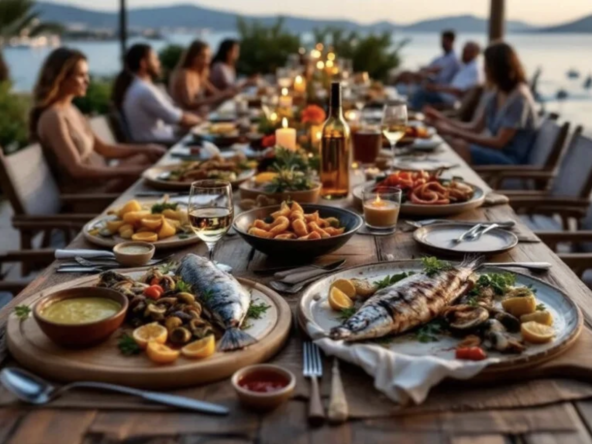
Lunch is typically the most substantial meal, served at anchor in a quiet bay. Afternoons are unstructured: swimming, paddleboarding from the boat’s tender, reading on deck, or simply doing nothing in particular. Evenings bring dinner — often grilled fish or meze-style spreads — followed by the kind of conversation that happens naturally when there is no schedule to keep.
The boat itself sets the rhythm. There is no rushing a gulet, and most guests stop trying within the first day.
Why the Gulet Remains Turkey’s Signature Charter Vessel
Modern boat building offers faster, more efficient, more technologically advanced options than a wooden hull with traditional rigging. The gulet persists anyway, and the reason is not nostalgia alone.
A gulet’s wide deck creates genuine social space in a way that narrower vessels cannot replicate — a group of twelve can gather for dinner without anyone feeling crowded. Its shallow draft opens up anchorages along the Turkish and Greek coastlines that larger or deeper vessels simply cannot reach. And its construction, still largely done by hand in shipyards like ours, connects charter guests to a craft tradition that most of the world’s yacht building abandoned decades ago.
We have built gulets in our Fethiye shipyard for two decades now. Every one of them still gets built the way the originals did — by people who learned the hull shape from people who learned it before them.
Frequently Asked Questions
How do you pronounce “gulet”?
“Goo-let.” The word comes from the Turkish *gulet*, itself derived from the French *goélette*, meaning schooner.
How many people can sleep on a gulet?
Most charter gulets sleep 8 to 16 guests across 4 to 8 cabins, though smaller and larger configurations exist.
Do gulets actually sail, or do they always use the engine?
Both. Gulets are fully capable of sailing and carry traditional rigging, but the majority of charter cruising happens under engine power for reliability of schedule. Captains raise sails when wind conditions make it worthwhile.
Are gulets safe in rough weather?
Gulets are notably stable vessels due to their wide beam, and Turkish Maritime Authority certification governs safety standards for all charter vessels. Captains make all weather-related routing decisions, and the Turkish Aegean is generally calm from June through September.
What is the difference between a gulet and a “Bodrum gulet”?
“Bodrum gulet” is sometimes used as a regional term referring to gulets built in or originating from the Bodrum boatbuilding tradition specifically, though the term is often used loosely to describe any traditional Turkish wooden charter vessel.
Can I charter a gulet without sailing experience?
Yes. All charter gulets operate with a professional captain and crew. Guests are never expected to sail, navigate, or assist with vessel operation.
See Our Gulets
Albatros Yachting builds and operates gulets from our own shipyard in Fethiye, Turkey, with a fleet ranging from intimate 4-cabin vessels to our larger flagship models. We have been doing this since 1995.
To see available vessels and discuss your charter:
📍 Fevzi Çakmak Cd. No:11, Yat Limanı, Fethiye, Turkey
📞 +90 4447405
✉️ info@albatrosyachting.com
🌐 albatrosyachting.com
*For European inquiries: our offices in Madrid, Spain and Germany are available in your local time zone.*
—
*Albatros Yachting is a member of TYBA (Turkish Yachting and Boating Association). All vessels operate under Turkish Maritime Authority certification.*